Q1: When did the AS-REP Roasting attack occur, and when did the attacker request the Kerberos ticket for the vulnerable user?
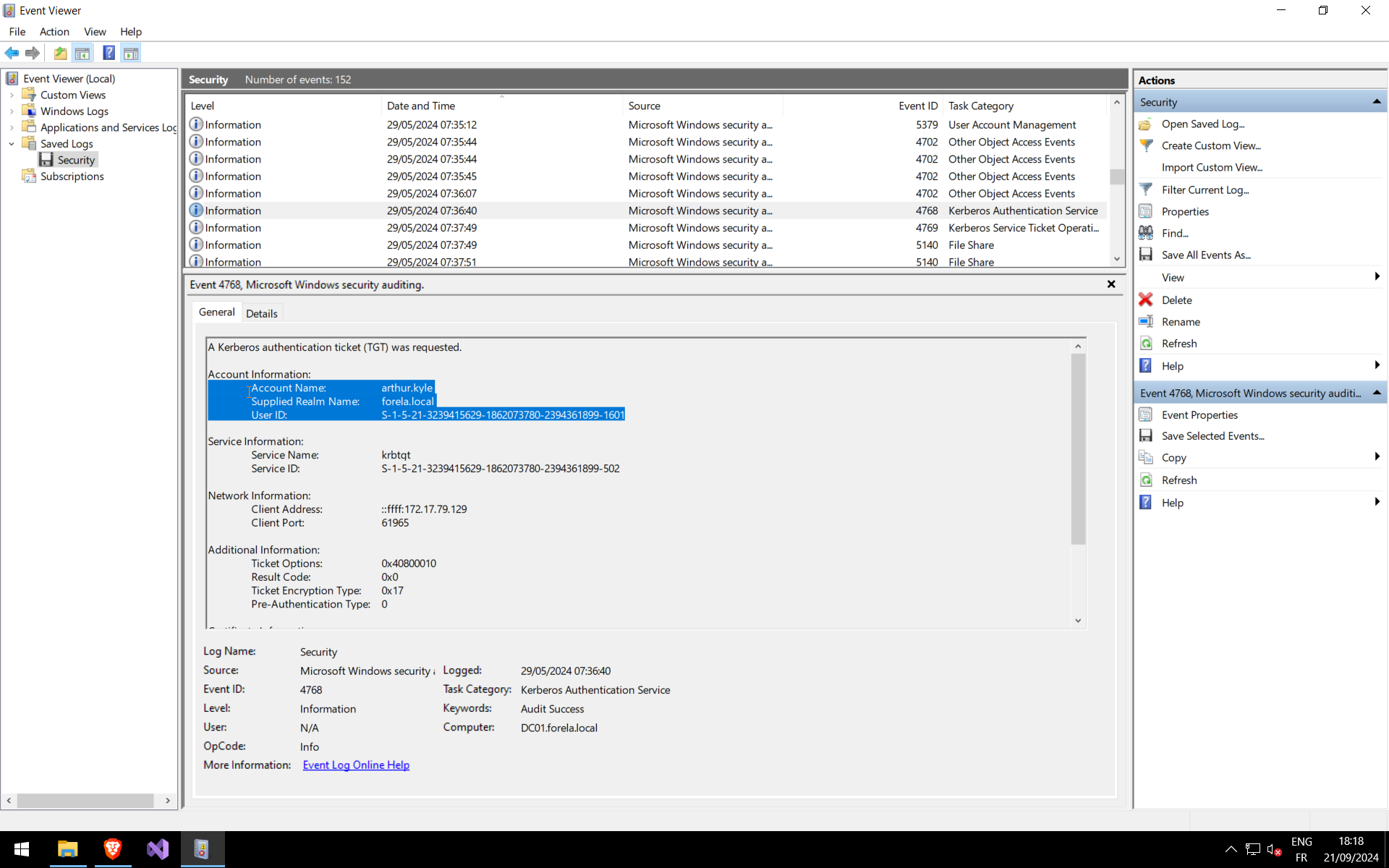
Open Event Viewer on the Windows VM and search for Event ID 4768.
Look for anomalies in the logs — specifically events where:
Pre-Authentication Type:
0
This indicates that the account does not require Kerberos pre-authentication, making it vulnerable to AS-REP Roasting.
🕒 Remember to convert the timestamp to UTC when documenting your findings.
Q2: Please confirm the User Account that was targeted by the attacker.
Within the same Event ID 4768, navigate to:
Account Information → Account Name
This field identifies the vulnerable account targeted during the attack.
Q3: What was the SID of the targeted account?
Again, in the same event:
Account Information → User ID
This value provides the unique Security Identifier (SID) of the compromised account.
Q4: Identify the internal IP address of the compromised workstation used in this attack.
In the same event, check:
Network Information → Client Address
This reveals the source system that initiated the AS-REP request.
Q5: Using the same Domain Controller security logs, determine which user account performed the AS-REP Roasting attack.
Search for Event ID 4769, which logs Kerberos service ticket requests.
Correlate this event with the earlier 4768 event to identify the attacker-controlled account.
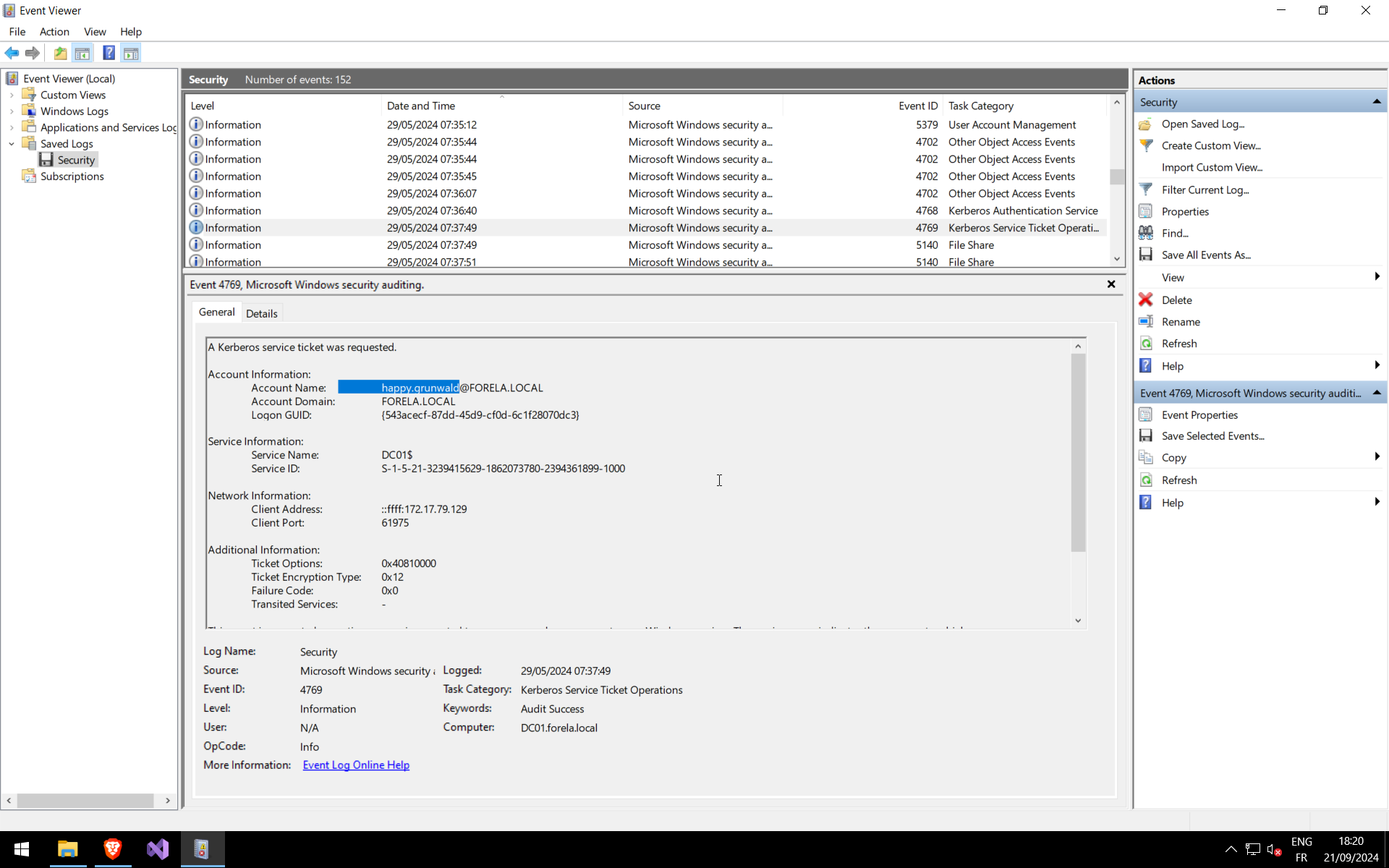
🔍 The Account Name in this event indicates the user account used to request service tickets after identifying the vulnerable account.